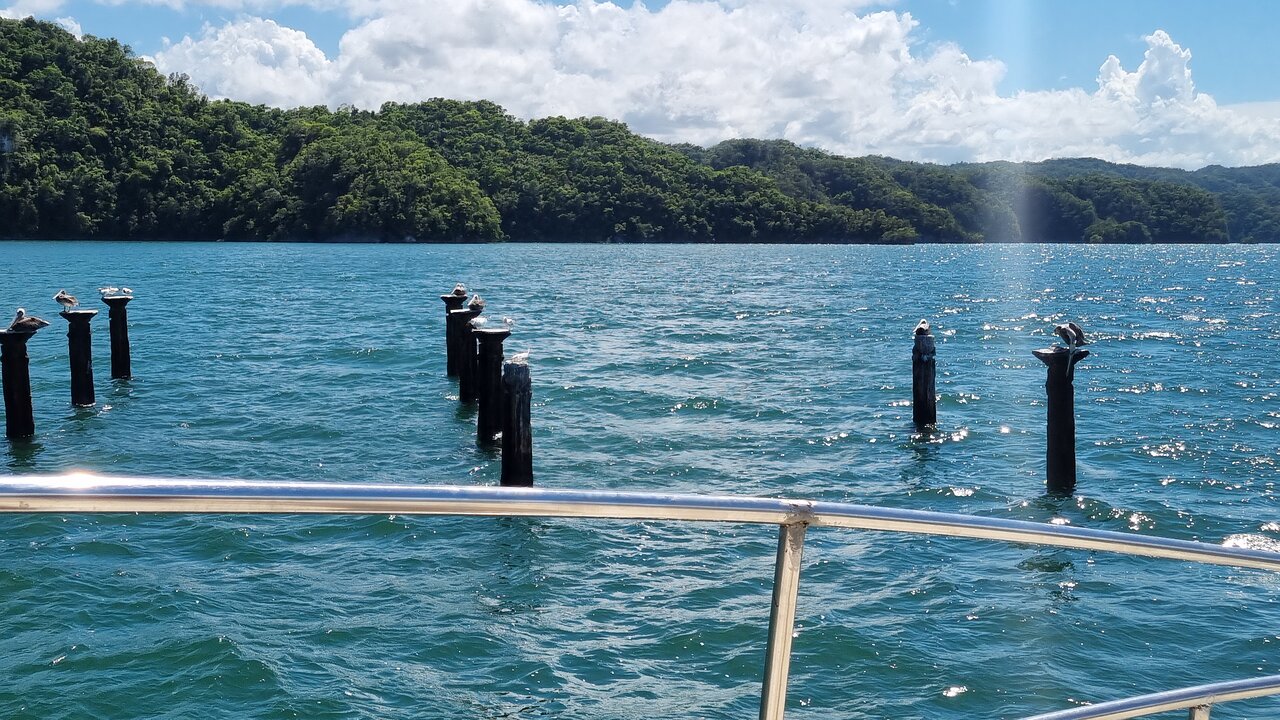
Herons and Egrets of Los Haitises: A Guide to the Park’s Wading Birds
The mangrove channels, shallow coastal waters and sheltered shorelines of Los Haitises National Park create valuable habitats for wading birds. Among the most recognizable are herons and egrets, birds that often stand motionless in shallow water before striking quickly at fish or other small prey.
Visitors exploring Los Haitises by boat may notice tall white birds along the water's edge, smaller herons moving between mangrove branches, or dark birds waiting quietly near the shoreline. These observations offer a glimpse into the park's wetland ecosystem.
The available Los Haitises National Park bird checklist includes several species in the heron family, Ardeidae. They include the Great Egret, Snowy Egret, Little Blue Heron, Tricolored Heron, Green Heron, Great Blue Heron and Yellow-crowned Night Heron, among others. The list also includes the Near Threatened Reddish Egret.
Learning to recognize these birds makes a nature excursion more interesting. It also helps visitors understand why mangroves, mudflats, shallow water and coastal vegetation are important to wildlife around Sabana de la Mar and Samaná Bay.
Why Are Herons and Egrets Important to Los Haitises?
Herons and egrets are wading birds adapted to finding food in shallow water and along wetland edges. Their long legs allow them to move through water while keeping much of their bodies above the surface. Their bills are adapted to catching fish, crustaceans, insects and other small animals.
Los Haitises offers a varied coastal landscape that includes mangrove forests, bays, small islands and sheltered waterways. These environments provide feeding opportunities for different wetland birds.
The Dominican Republic's official tourism information for Los Haitises specifically mentions herons and egrets among the birds visitors may see in the park. The Avibase checklist also records a broad range of species from the heron family.
Their presence is ecologically meaningful. Wading birds are part of the food web connecting fish, crabs, insects and other wetland organisms. They also depend on healthy habitats where prey remains available.
Herons and Egrets Recorded in Los Haitises
The following species appear in the available Avibase checklist for Los Haitises National Park. Individual sightings are not guaranteed, and the checklist should be treated as a record of species associated with the park rather than a promise that every bird will be visible on a particular excursion.
Common nameScientific nameUseful identification featureGreat EgretArdea albaLarge, entirely white body and yellow billSnowy EgretEgretta thulaWhite plumage, black bill and yellow feetLittle Blue HeronEgretta caeruleaDark blue-gray adult plumageTricolored HeronEgretta tricolorBlue-gray body with a white belly and neck markingsReddish EgretEgretta rufescensDark or white color phase; shaggy appearanceGreen HeronButorides virescensSmall, compact heron with dark upperpartsGreat Blue HeronArdea herodiasLarge gray-blue heron with a long neckYellow-crowned Night HeronNyctanassa violaceaDark body and distinctive pale yellow crownBlack-crowned Night HeronNycticorax nycticoraxStocky body and black crownLeast BitternBotaurus exilisVery small, secretive wetland birdWestern Cattle-EgretArdea ibisWhite bird often associated with grazing animals
The Least Bittern belongs to the same family, although its body shape and behavior are different from the taller herons and egrets. It is included here because it is part of the park's recorded Ardeidae family.
Great Egret: The Tall White Hunter
The Great Egret is one of the easiest wading birds to recognize. It is large, entirely white and has a long neck, long legs and a pointed yellow bill.
It often stands still in shallow water while waiting for prey. When a fish or other small animal moves within reach, the egret can strike rapidly with its bill.
How to identify a Great Egret
Look for these features:
- Large, slender white body.
- Long neck that can form an S-shaped curve.
- Long dark legs.
- Yellow bill in typical adult plumage.
- Slow, deliberate movements while feeding.
The Great Egret can be confused with other white egrets from a distance. Its larger size is useful, but comparing bill color, leg color and overall proportions provides a more reliable identification.
Where does it feed?
Great Egrets use a range of shallow-water habitats. They may feed along lagoons, estuaries, marshes, tidal flats and other wetland edges.
In Los Haitises, the coastal landscape provides opportunities for wetland birds to search for prey. However, the exact feeding location of an individual bird can change with water levels, prey availability and disturbance.
Snowy Egret: A Smaller White Wader with Yellow Feet
The Snowy Egret is another white species recorded in Los Haitises. It is smaller and more delicate-looking than the Great Egret.
Its most useful identification features are its black bill, black legs and bright yellow feet. Those yellow feet can be particularly noticeable when the bird walks through shallow water.
Snowy Egrets use different feeding techniques. They may walk, run, stir the water or move their feet to disturb prey and make small aquatic animals easier to catch.
Great Egret or Snowy Egret?
The two birds are both white, but several details help distinguish them.
FeatureGreat EgretSnowy EgretSizeLargerSmallerBillYellowBlackFeetDarkBright yellowBody shapeTall and slenderMore compactFeeding behaviorOften stands and strikesMay actively stir shallow water
If you see a white bird with bright yellow feet, it may be a Snowy Egret. If the bird is considerably larger and has a yellow bill, a Great Egret is a stronger possibility.
Little Blue Heron: A Dark Coastal Wader
The Little Blue Heron has a distinctive appearance as an adult. Its body is mostly blue-gray, with a darker reddish or purplish tone around the head and neck.
Juvenile birds look very different. They are largely white, which can make them easy to confuse with small white egrets.
As they mature, their plumage changes from white toward the darker adult coloration. This transition is useful to remember when identifying birds in the field.
Feeding habits
Little Blue Herons feed in shallow wetlands and along coastal edges. Their diet includes small fish, crustaceans, insects and other aquatic animals.
They generally move slowly while searching for prey, then use their bills to capture it.
Because their juvenile plumage is white, observing the bird's size, bill and leg characteristics can help avoid identification mistakes.
Tricolored Heron: A Striking Bird of Shallow Water
The Tricolored Heron is a slender wading bird with a combination of blue-gray, white and reddish-brown tones.
Its adult appearance usually includes a blue-gray upper body, a white belly and distinctive white markings along the neck. During feeding, it may move actively through shallow water rather than standing still for long periods.
This species uses a variety of coastal wetlands, including lagoons, estuaries and marshy shorelines.
How does it catch prey?
Tricolored Herons may use several feeding methods:
- Standing motionless before striking.
- Walking slowly through shallow water.
- Running after small fish.
- Changing position to approach prey from a better angle.
Their feeding behavior can be interesting to observe because it is often more active than the patient hunting style associated with some larger herons.
Reddish Egret: A Special Bird to Look For
The Reddish Egret is particularly interesting because it occurs in two main color phases.
The dark phase has a grayish body with a reddish-brown head and neck. The white phase is mostly white, although the bill and other features still help distinguish it from other white egrets.
The species is included in the Los Haitises checklist and is classified as Near Threatened in the status shown by that checklist.
Why is the Reddish Egret unusual?
One of its most recognizable characteristics is its energetic feeding behavior.
Rather than always standing still, a Reddish Egret may run, turn, spread its wings or use its body to create shade over the water while hunting. These movements can help it locate and catch fish in shallow areas.
Its active hunting style is very different from the slow, patient behavior often associated with larger white egrets.
Why does its conservation status matter?
The Reddish Egret has a more restricted distribution than many widespread wetland birds. Coastal habitat changes and disturbance can affect suitable feeding and nesting areas.
Its Near Threatened classification is a reminder that protecting coastal wetlands matters beyond their value as scenic places for visitors.
A bird's presence in a park checklist does not establish that it is common. Visitors should appreciate any sighting without expecting to encounter this species on every trip.
Green Heron: The Small Hunter Along the Mangroves
The Green Heron is much smaller than the Great Blue Heron or Great Egret. It has a compact body, relatively short legs and a dark-looking head and upperparts.
Its coloration can appear greenish, gray, chestnut and dark brown depending on lighting conditions.
Green Herons are often associated with quiet wetland edges. They may perch on branches close to the water, where they can watch for small fish and other prey.
A patient and clever feeder
Green Herons are known for their ability to wait patiently for prey. They may also use objects as lures in some circumstances, although this behavior is not something visitors should expect to witness.
Their smaller size allows them to use narrow water channels and vegetated edges where larger wading birds may be less comfortable.
For visitors traveling through mangrove channels, a small heron perched quietly beside the water can be easy to overlook.
Great Blue Heron: One of the Largest Wading Birds
The Great Blue Heron is a large bird with a long neck, long legs and a broad wingspan. Its plumage is mostly blue-gray, with a dark head pattern and a long pointed bill.
It often hunts by standing still in shallow water. When a fish approaches, it extends its neck and strikes quickly.
Its large size makes it easier to recognize than many smaller wetland birds, especially when seen standing near the shoreline or flying over open water.
During flight, herons generally hold their necks folded back rather than extending them forward. This is a useful difference when comparing them with some other long-necked waterbirds.
Night Herons: Birds That Become Active After Dark
Los Haitises also has two night heron species on its available checklist: the Yellow-crowned Night Heron and the Black-crowned Night Heron.
These birds have a different activity pattern from many of the egrets commonly seen feeding during daylight.
Yellow-crowned Night Heron
The Yellow-crowned Night Heron has a dark body, a pale or yellowish crown and a strong bill.
It is particularly associated with feeding on crabs and other crustaceans, although it can take additional prey.
Coastal areas with crabs and suitable resting sites are important to this species.
Black-crowned Night Heron
The Black-crowned Night Heron has a stocky body, short legs and a dark crown and back. Adults generally show a pale gray body and red eyes.
It often rests in vegetation during daylight and becomes more active around dusk and at night.
How are night herons different?
Compared with many daytime egrets, night herons tend to have shorter legs, stockier bodies and different feeding schedules.
A visitor may see one resting quietly in vegetation rather than actively hunting in open water.
Western Cattle-Egret: A Heron Often Seen Away from Water
The Western Cattle-Egret is a small, mostly white heron that differs from many other members of the family because it frequently feeds on land.
It may follow grazing livestock and catch insects disturbed by the movement of animals.
During the breeding season, some individuals develop buff-colored feathers on the head, chest and back. Outside that period, the bird is mostly white.
Although cattle egrets are associated with fields and open grassland, they can also occur around wetlands and other landscapes.
Their presence demonstrates that the heron family includes birds with different feeding strategies, not just species that hunt in water.
Least Bittern: A Secretive Wetland Relative
The Least Bittern is one of the smallest members of the heron family. It is included in the Los Haitises checklist, but it is much harder to observe than large egrets.
Its small size and streaked brown plumage help it blend into dense wetland vegetation.
Rather than standing in open water, it may move through reeds and other plants, gripping vegetation with its long toes.
Because it is secretive, visitors should not expect an easy sighting. It is often more useful to listen and observe quietly than to search by approaching dense vegetation.
Why Mangroves Matter to Herons and Egrets
Mangroves are among the most important coastal habitats associated with Los Haitises.
Their roots and sheltered channels create complex environments that support fish, crabs, mollusks and other aquatic organisms. These animals form part of the food supply for many wetland birds.
Mangrove habitats also provide:
- Sheltered waterways where birds can search for prey.
- Vegetation for resting and cover.
- Connections between land and marine ecosystems.
- Areas that support juvenile fish and other aquatic life.
- Coastal protection and important ecological functions.
Not every heron or egret uses mangroves in exactly the same way. Some species feed in open shallows, others use muddy edges, and smaller birds may remain close to vegetation.
The variety of habitats around Los Haitises helps explain why the park supports several members of the heron family.
How to Watch Herons and Egrets During a Los Haitises Boat Trip
A boat excursion can provide a useful perspective on the park's coastal habitats. However, the best approach to birdwatching is to remain patient and observe from a respectful distance.
Here are practical tips:
- Watch the shoreline: Herons and egrets often search for food near shallow water.
- Look at mangrove edges: Small species may rest or hunt close to vegetation.
- Bring binoculars: They help identify birds without approaching them.
- Notice bill and leg colors: These features are useful for distinguishing white egrets.
- Observe feeding behavior: Running, standing still or stirring the water can provide identification clues.
- Look at the bird's size: A Great Egret is much larger than a Snowy Egret.
- Listen to your guide: A knowledgeable guide may help identify birds that are difficult to see.
Do not enter restricted areas or approach nesting colonies for photographs. Wildlife observation should never take priority over protecting the birds.
Best Photography Tips for Wading Birds
Herons and egrets can make excellent photographic subjects because they often move slowly while feeding.
For better photographs:
- Use a telephoto lens when possible.
- Keep a respectful distance from birds.
- Photograph feeding behavior without chasing the animal.
- Use a faster shutter speed when a bird strikes at prey.
- Pay attention to reflections in calm water.
- Avoid overexposing white plumage in bright sunlight.
- Include mangroves or coastal scenery to show the bird's habitat.
White birds can be difficult to photograph in strong sunlight. Check exposure carefully so that the feathers retain visible detail.
A photograph of a bird feeding naturally is often more valuable than a close image taken after disturbing it.
Frequently Asked Questions
Are herons and egrets found in Los Haitises National Park?
Yes. The available park checklist records several herons and egrets, including Great Egret, Snowy Egret, Little Blue Heron, Tricolored Heron, Green Heron and Great Blue Heron.
What is the difference between a heron and an egret?
Both are members of the family Ardeidae. The common names are not strict scientific divisions. Egrets are often associated with white plumage, but herons can also be white, and some egrets have darker plumage.
Which is the largest egret in Los Haitises?
The Great Egret is a large, tall white wading bird and is noticeably larger than the Snowy Egret.
How can I identify a Snowy Egret?
Look for its white body, black bill, black legs and bright yellow feet.
Is the Reddish Egret found in Los Haitises?
Yes. It appears on the available park checklist. It is classified as Near Threatened in that checklist's conservation-status information, although a sighting is not guaranteed.
Are night herons active during the day?
Night herons are generally more active around dusk and at night, but they may also be seen resting in vegetation during daylight.
What do herons and egrets eat?
Their diets vary by species but commonly include fish, crustaceans, insects, amphibians and other small aquatic animals.
Can I see herons and egrets on a boat tour?
You may have opportunities to observe wading birds during a Los Haitises boat excursion. The species seen will depend on natural conditions and bird activity.
Why are mangroves important to these birds?
Mangroves support aquatic life and provide sheltered coastal habitat. Their ecosystems help sustain the fish and invertebrates that many wading birds eat.
Discover the Birdlife of Los Haitises from Sabana de la Mar
Herons and egrets reveal how much wildlife activity takes place along the edges of Los Haitises' coastal waters.
From the tall Great Egret to the small Green Heron, each species has its own feeding strategy and habitat preferences. The Reddish Egret's energetic hunting movements and the night herons' quieter behavior show just how varied the family can be.
If you are planning a visit from Sabana de la Mar, consider adding wildlife observation to your experience of the park's mangroves, limestone formations and sheltered waterways.
Choose an excursion with a clear itinerary, confirm its departure arrangements and follow the guide's instructions. Most importantly, enjoy the birds without disturbing them or damaging the habitats that support their lives.
Los Haitises is more than a scenic boat destination. It is a living coastal ecosystem, and its wading birds are an important part of that natural story.
Local explorer & expert guide in Birdwatching Guide.