Caves of Los Haitises National Park: History, Taíno Rock Art and Natural Features
The caves of Los Haitises National Park are among the most fascinating attractions in the Dominican Republic. Hidden within a landscape of limestone hills, mangrove waterways and tropical forest, these natural chambers preserve both geological features and traces of the island's Indigenous history.
Some caves are known for their rock formations, while others are especially important because of the pictographs and petroglyphs found on their walls. These markings provide a connection to the Taíno people who lived in the Caribbean before European colonization.
Exploring a cave in Los Haitises is therefore more than an opportunity to see an unusual natural formation. It is also a chance to learn about the relationship between people, landscape and cultural heritage.
This guide introduces the park's notable caves, explains the difference between natural formations and ancient rock art, and describes what visitors should know before planning a cave visit.
Why Are There So Many Caves in Los Haitises?
The landscape of Los Haitises is largely associated with limestone, a rock that can gradually dissolve when exposed to naturally acidic rainwater.
Over long periods, water moves through cracks and openings in the rock. These processes can enlarge underground spaces and create caves, passages and other karst features.
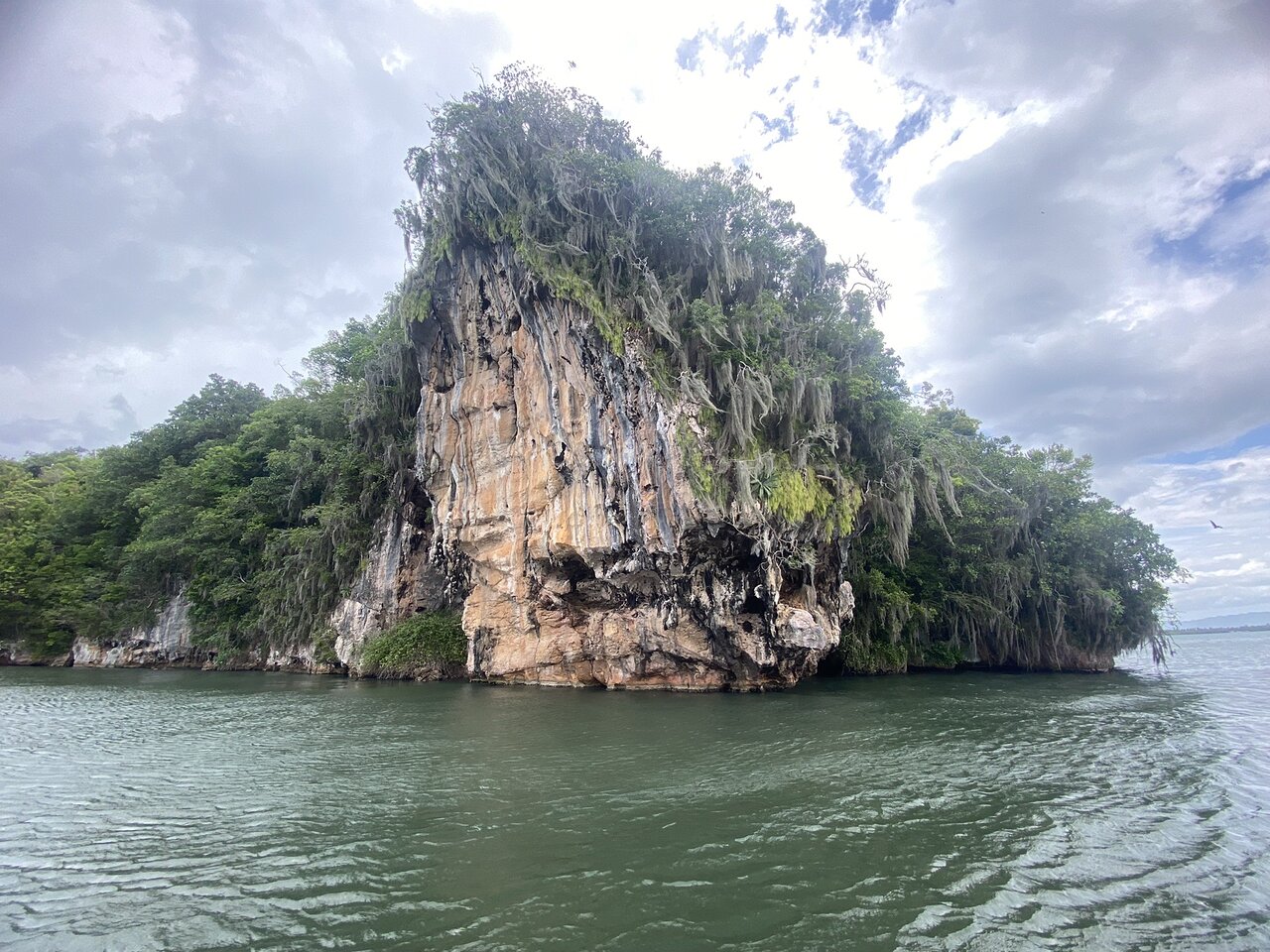
The wider park landscape contains several recognizable karst formations, including mogotes—steep-sided limestone hills that rise above the surrounding vegetation and waterways.
Caves are part of this geological system. Some contain large chambers, while others have narrower passages, uneven floors or openings that allow daylight to enter.
The combination of tropical rainfall, limestone geology and coastal conditions has helped create the distinctive environment visitors encounter in Los Haitises.
What Makes the Caves Culturally Important?
The caves are important not only because of their natural appearance but also because some contain evidence of human activity from before European colonization.
Taíno communities lived throughout Hispaniola and other Caribbean islands. Their cultural traditions included artistic and symbolic expressions, some of which survive in cave environments.
In Los Haitises, researchers have documented pictographs, petroglyphs and other archaeological remains in several caves and rock shelters.
These remains should be understood as cultural heritage rather than cave decoration. Their exact meanings and purposes may not always be known, so visitors should avoid assuming that every symbol has a confirmed interpretation.
Pictographs and Petroglyphs: What Is the Difference?
Two terms frequently appear when discussing the ancient rock art of Los Haitises.
Pictographs
Pictographs are images or markings created using pigment applied to a rock surface.
They may appear as lines, shapes, figures or other visual patterns. Their colors and visibility depend on the original materials, the condition of the rock and the passage of time.
Petroglyphs
Petroglyphs are designs made by modifying the rock surface, for example by carving, engraving or pecking.
They may appear as grooves, outlines, geometric patterns or recognizable forms.
Why the distinction matters
Both forms of rock art are valuable archaeological evidence, but they are created differently.
Visitors should never touch, scratch, paint over or attempt to clean either type of marking. Even seemingly harmless contact can contribute to the deterioration of fragile surfaces.
Notable Caves in Los Haitises National Park
The Ministry of Environment identifies several caves among the park's points of interest. The following are some of the best-known names associated with its natural and archaeological heritage.
1. Cueva de la Arena
Cueva de la Arena is one of the notable caves of Los Haitises, located in the coastal landscape near Sabana de la Mar.
According to the Dominican Republic's film-location authority, DGCINE, it is a natural cavity formed in karst limestone. Its description includes galleries with sand deposits, stalactites, stalagmites and humid conditions.
The cave is also important for its Taíno pictographs and petroglyphs.
Its coastal setting creates an interesting contrast between the underground environment and the mangrove and marine landscape outside. The journey to the cave is commonly associated with access by water.
Why it is interesting: It combines limestone geology, cave formations and archaeological heritage in one location.
Visitor note: Confirm current access arrangements and whether the cave is included in your excursion.
2. Cueva de San Gabriel
Cueva de San Gabriel is another recognized cave in the park.
The official Ministry of Environment park information lists it among the sites of interest. A historical park management plan also records pictographs and petroglyphs at the cave.
Its archaeological value makes it an important location for understanding the cultural heritage of Los Haitises.
As with other caves, the experience should be approached with respect for the rock surfaces and archaeological remains.
Why it is interesting: It offers an opportunity to learn about the relationship between the cave landscape and Taíno rock art.
Visitor note: Ask whether the cave is currently accessible and included in the confirmed itinerary.
3. Cueva de la Línea
Cueva de la Línea, also known in historical sources as Cueva del Ferrocarril or Cueva del Templo, is especially well known for its archaeological significance.
A historical park management document identifies it as an important cave for rock art and reports more than 950 visible paintings at the time the document was prepared.
These figures belong to that historical inventory and should not be presented as a current archaeological count.
The cave's name is associated with a former railway route near its entrance, according to the Dominican Republic's official tourism information.
Important visitor-access update: On June 23, 2026, the Dominican Republic Ministry of Environment announced the temporary closure of Cueva de la Línea. The decision followed inspections that found deterioration in the access pier, including damaged wooden sections and unstable handrails.
The Ministry stated that the cave would remain closed until the necessary work could ensure safe public access. Do not assume it has reopened simply because it appears on older tour descriptions or park lists. Check the latest official notice before planning a visit.
Why it is important: Its extensive historical rock-art record makes it a significant cultural site in Los Haitises.
4. Cueva de la Boca del Infierno
Cueva de la Boca del Infierno appears in the historical park management inventory of archaeological sites.
The document records paintings on its walls and evidence of pre-Hispanic shell deposits.
It is an example of why the archaeological importance of Los Haitises extends beyond the caves most commonly mentioned in visitor itineraries.
Why it is interesting: It contributes to the wider archaeological record of the park.
Visitor note: Historical documentation does not establish that a cave is currently open to tourists. Confirm access with the park authorities.
5. Cueva de Willy Simó
Cueva de Willy Simó is another cave named in the historical management plan.
The inventory records petroglyphs and an important pre-Hispanic shell deposit.
This makes it relevant to archaeological research and the wider understanding of human activity in the region.
Why it is interesting: It demonstrates that the cultural history of Los Haitises is preserved in more than just its most famous caves.
Visitor note: Do not assume it is part of a standard public excursion.
6. Other Recorded Caves and Rock Shelters
Historical archaeological documentation also mentions other caves and rock shelters, including Cueva de Jhonny or de Lelo, Cueva de Tony, Cueva del Indio, Cueva del Carpintero and several smaller rock shelters.
These sites help illustrate the broader distribution of archaeological evidence in Los Haitises.
However, a site appearing in an archaeological inventory does not mean it has visitor infrastructure, an approved public route or permission for independent exploration.
Visitors should stick to sites and routes authorized by park management.
What Natural Formations Can You See Inside the Caves?
Caves are shaped by geological processes that may continue for very long periods.
Depending on the particular cave, visitors may encounter several natural features.
Stalactites
Stalactites hang down from cave ceilings. They can form as mineral-rich water drips from the rock and leaves behind small mineral deposits.
Over time, these deposits may build into elongated structures.
Stalagmites
Stalagmites grow upward from cave floors as mineral deposits accumulate where water drips.
If a stalactite and stalagmite eventually meet, they can form a column.
Limestone Walls and Passages
Cave walls may show irregular textures, cracks and openings shaped by water movement and geological processes.
Some passages are wide, while others may be narrow or uneven. Visitors should never leave authorized paths to investigate them independently.
Sand and Sediment Deposits
Some caves contain sand and other deposits carried or accumulated by natural processes.
Cueva de la Arena is specifically described by DGCINE as containing galleries with sand deposits.
How Did the Taíno People Use Caves?
Caves have cultural significance across many parts of the Caribbean.
They can provide shelter, contain sources of water or serve as places of cultural and symbolic importance. Archaeological evidence in Los Haitises shows that caves were used or visited by people in the pre-Hispanic period.
Rock art and shell deposits provide clues about past human activity.
However, the exact purpose of every cave or marking cannot be assumed from appearance alone. Archaeological interpretation requires careful study of the site, its context and associated evidence.
For visitors, the most respectful approach is to appreciate the remains without claiming certainty about symbols or rituals that researchers may still be studying.
What Is the Difference Between a Cave Visit and a Cave Adventure?
Not every cave experience involves the same level of physical activity.
Some visitor sites may have established access arrangements and short walking sections. Other caves and archaeological locations may be difficult to reach or unsuitable for ordinary tourism.
A guided visit to an authorized cave should not be confused with independent caving or technical spelunking.
Before booking, ask the operator:
- Which specific cave is included?
- Is it currently open to visitors?
- How do visitors reach the entrance?
- Are there stairs, walkways or uneven surfaces?
- How much walking is required?
- Is the route suitable for children or visitors with mobility limitations?
- Are cave visits affected by current maintenance or safety restrictions?
These questions help you choose an experience that matches your expectations.
What to Bring for a Cave Visit
The equipment you need depends on the approved route and the operator's instructions.
Useful items may include:
- Comfortable footwear with a suitable grip.
- Lightweight clothing suitable for humid conditions.
- Drinking water.
- A small waterproof bag for electronics.
- A camera or phone, if photography is permitted.
- Any personal medication you may need.
Do not bring equipment that encourages unauthorized exploration. A guide or park authority should determine which areas are accessible.
Rules for Protecting Taíno Rock Art
The cultural heritage inside Los Haitises' caves is fragile. Once a pictograph or petroglyph is damaged, it may be impossible to restore its original condition.
Follow these rules:
- Never touch paintings, carvings or other archaeological remains.
- Do not write names or symbols on cave walls.
- Do not remove stones, shells or archaeological objects.
- Stay on authorized visitor routes.
- Follow restrictions on lighting and photography.
- Do not use flash where prohibited by park management.
- Avoid loud noises and unnecessary disturbance.
- Follow all instructions from authorized guides and park staff.
Responsible visitors help protect the caves for future generations.
Can You Visit the Caves From Sabana de la Mar?
Sabana de la Mar is an important access point for exploring the Los Haitises region.
Many visitors organize excursions from this area, with boat travel forming part of the journey to selected park sites.
However, the exact cave stops depend on the confirmed itinerary, current access conditions and official park restrictions.
Cueva de la Arena and Cueva de San Gabriel are among the caves listed by the Ministry of Environment. Cueva de la Línea requires special attention because of its June 2026 temporary closure announcement.
Before traveling, ask your tour operator to confirm which caves are open and included. Do not rely solely on old promotional photographs or outdated itineraries.
Frequently Asked Questions About Los Haitises Caves
What are the most famous caves in Los Haitises?
Cueva de la Arena, Cueva de San Gabriel and Cueva de la Línea are among the best-known caves associated with the park's natural and archaeological heritage.
Do the caves contain Taíno rock art?
Yes. Official and historical park documents identify pictographs and petroglyphs in several caves and rock shelters in Los Haitises.
What is the difference between a pictograph and a petroglyph?
A pictograph is made by applying pigment to a rock surface. A petroglyph is created by carving, engraving or otherwise modifying the rock.
Is Cueva de la Línea open to visitors?
The Dominican Republic Ministry of Environment announced its temporary closure on June 23, 2026, because of deterioration to its access pier. Check the latest official announcement before planning a visit.
Can visitors explore Cueva de la Arena?
Cueva de la Arena is identified as a site of interest in official sources. Actual visitor access depends on current park rules, conditions and the confirmed excursion.
Can you visit Cueva de San Gabriel?
It is listed among the park's points of interest. Confirm current access and whether it is part of your tour before traveling.
Are the caves natural formations?
Yes. The caves developed in limestone through geological processes involving water and the gradual dissolution of rock.
Are there stalactites and stalagmites in Los Haitises?
Official descriptions of Cueva de la Arena mention both stalactites and stalagmites.
Can I touch the Taíno paintings?
No. Visitors should never touch, scratch or alter rock art. These markings are fragile archaeological resources.
Can I explore the caves without a guide?
Do not assume independent cave exploration is permitted. Follow the park's visitor rules and use only authorized routes and access arrangements.
Discover the Cultural and Natural Heritage of Los Haitises
The caves of Los Haitises reveal a remarkable combination of natural history and human heritage. Their limestone chambers reflect long geological processes, while their rock art and archaeological remains preserve evidence of earlier inhabitants of Hispaniola.
Cueva de la Arena, Cueva de San Gabriel and Cueva de la Línea are important names to understand when researching the park. However, access can change, and historical archaeological records do not guarantee that every cave is open to visitors.
Plan your excursion around confirmed visitor access, respect all conservation instructions and never touch the ancient markings.
By protecting these caves, visitors and local tourism operators can help preserve an important part of the Dominican Republic's natural and cultural heritage.
Local explorer & expert guide in Birdwatching Guide.