Ridgway's Hawk in Los Haitises: The Story of a Critically Endangered Dominican Bird
The forests of Los Haitises National Park are home to an extraordinary variety of wildlife, including one of the Dominican Republic's most important conservation species: the Ridgway's hawk (Buteo ridgwayi). This rare bird of prey has a remarkable story. Once found across much more of the island of Hispaniola, its population declined dramatically because of habitat destruction, persecution and problems affecting its young.
For many years, Los Haitises was the species' last major stronghold. Conservationists, local communities and wildlife organizations have since worked to protect nesting birds, improve breeding success and establish additional populations in other parts of the Dominican Republic.
The story of the Ridgway's hawk is not simply about a rare bird. It demonstrates why protecting forests, supporting local conservation and managing tourism responsibly are essential to the future of the country's natural heritage.
What Is the Ridgway's Hawk?
The Ridgway's hawk is a bird of prey native to Hispaniola, the Caribbean island shared by the Dominican Republic and Haiti. Its scientific name is Buteo ridgwayi, and it belongs to the hawk family Accipitridae.
Like other hawks, it is adapted for hunting. It uses its eyesight to locate prey and its powerful feet and curved talons to capture animals. It may be seen perched in trees or moving through forest habitats while searching for food.
The species is especially significant because its natural distribution is restricted to Hispaniola. This makes the protection of suitable forest habitat in the Dominican Republic and Haiti important for its long-term survival.
BirdLife International's assessment, published in 2020, classified the Ridgway's hawk as Critically Endangered. Although conservation work has produced encouraging population growth, this classification should not be confused with a declaration that the species is safe. Its recovery still requires long-term protection and monitoring.
Why Is Los Haitises Important to the Ridgway's Hawk?
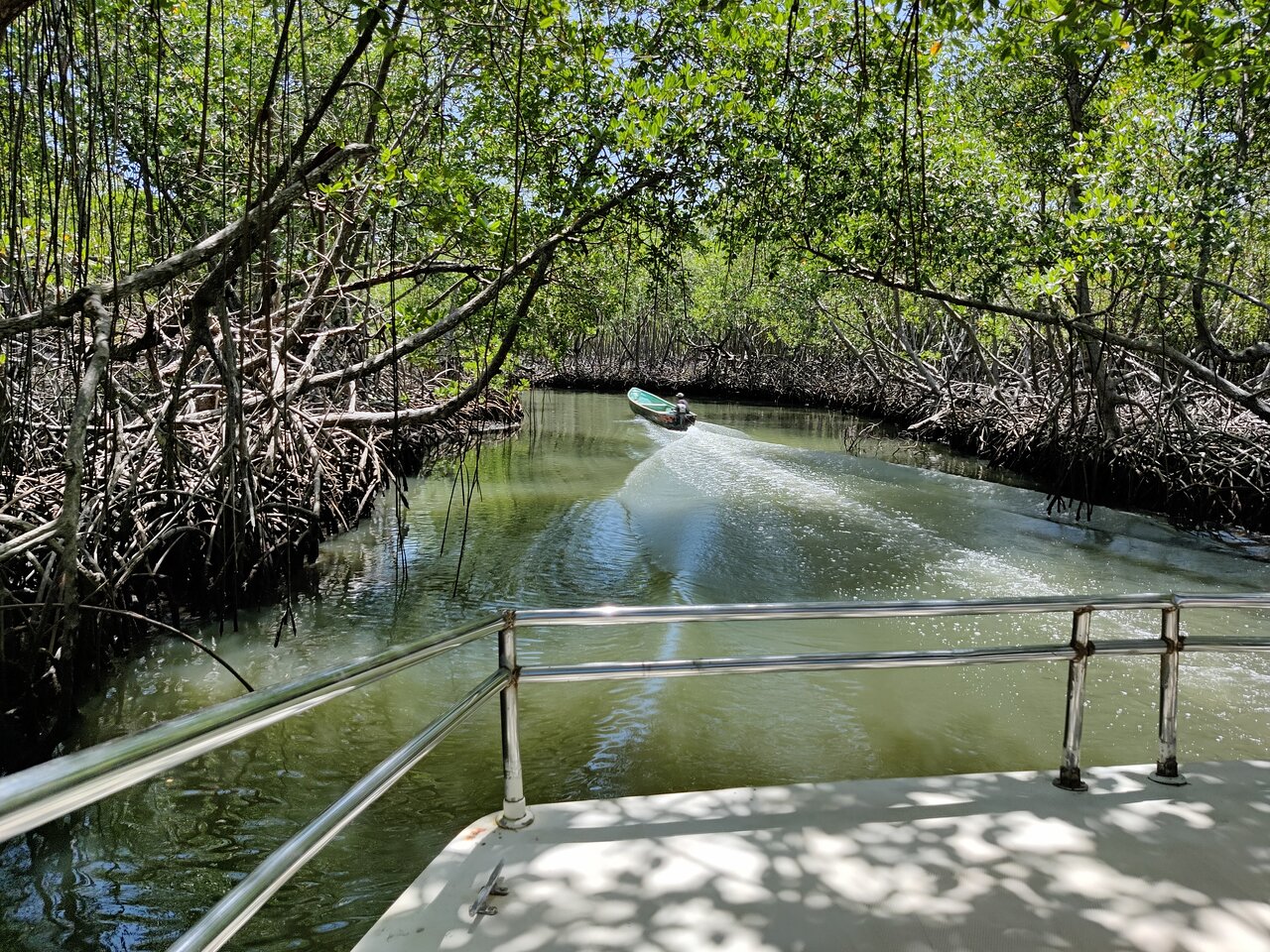
Los Haitises National Park contains a distinctive landscape of tropical forest, limestone hills, wetlands and mangrove ecosystems. Its forested areas provide habitat for many birds, including species that depend on relatively undisturbed woodland.
For the Ridgway's hawk, the park has played a particularly important role. When The Peregrine Fund began studying the species around 2000, researchers found that only approximately 300 individuals remained, with the surviving population concentrated in Los Haitises.
This made the park a critical stronghold. Protecting its remaining forest habitat was essential not only for individual birds but also for maintaining breeding territories and allowing the population to recover.
The park's conservation value extends beyond this single species. Forest protection supports other native birds, reptiles, mammals, insects and plants. It also helps maintain the wider ecological connections between the park's forests, wetlands and coastal environments.
Why Did the Ridgway's Hawk Become Endangered?
The decline of the Ridgway's hawk resulted from several pressures rather than one isolated problem.
1. Loss and degradation of forest habitat
Forest clearing reduces the places where hawks can nest, rest and hunt. When woodland is fragmented, suitable habitat becomes separated into smaller areas.
The loss of mature trees can be particularly damaging because breeding birds need appropriate nesting locations. Agricultural expansion and other forms of land conversion have historically contributed to pressure on the forests of Hispaniola.
2. Human persecution
Some people have killed Ridgway's hawks because they believe the birds threaten domestic poultry. This conflict can occur when hawks hunt near farms and settlements.
Conservation programs therefore need to work with communities, not simply focus on protecting birds inside park boundaries. Education and practical ways to reduce conflict can help people understand the hawk's ecological role and become partners in its protection.
3. Parasitic flies affecting nestlings
Another serious challenge has involved parasitic botflies. Their larvae can infest young hawks in their nests, weakening or killing nestlings.
This problem can reduce the number of young birds that survive to adulthood. Even when adult pairs successfully establish nests, poor nestling survival can prevent a population from replacing itself.
Researchers and conservation teams developed nest-monitoring and management methods to reduce the impact of these parasites and improve breeding success.
4. A small and concentrated population
When most individuals of a species live in one main area, a major disturbance can affect a large proportion of the population.
A severe storm, disease outbreak, habitat loss or other unexpected event could threaten many breeding birds at once. Establishing additional populations in suitable locations helps reduce the risk of relying on a single stronghold.
Is the Ridgway's Hawk Still Critically Endangered?
Yes. BirdLife International's 2020 assessment lists the Ridgway's hawk as Critically Endangered. The assessment also recorded an increasing population trend, reflecting the progress made through conservation work.
More recent information from The Peregrine Fund reports that the population had grown to around 600 individuals by 2026, distributed across four populations in Hispaniola. This is an encouraging development compared with the approximately 300 birds reported when the organization began studying the species.
These figures come from different sources and reporting periods, so they should not be treated as a single standardized population census. The key message is that the population has shown substantial recovery, but the species remains at serious risk and needs continued protection.
Its conservation status is a reminder that an improving population does not automatically mean that a species has recovered enough to survive without support.
How Conservationists Are Helping the Ridgway's Hawk
The recovery of the Ridgway's hawk is the result of long-term research and practical conservation work. The Peregrine Fund and its Dominican partners, including Fondo Peregrino República Dominicana, have worked on several connected approaches.
Monitoring nests and breeding pairs
Field teams search for nesting pairs, monitor active nests and record breeding activity. These observations help conservationists understand where hawks are reproducing and whether their numbers are changing.
Monitoring also helps teams identify problems early enough to respond during the breeding season.
Improving nestling survival
Conservation workers have developed nest-management methods to reduce the effects of parasitic flies on young hawks.
This work is important because protecting adult birds alone is not enough. A sustainable population also needs young birds to survive, leave their nests and eventually reproduce.
Establishing additional populations
Conservationists have released young hawks in suitable locations outside Los Haitises to create additional populations.
Punta Cana became an important example of this approach. The Peregrine Fund reports that 127 young hawks were released there between 2009 and 2017. By 2023, the organization documented 28 pairs and more than 130 wild fledglings in the area.
Reintroduction work has also taken place at Aniana Vargas National Park. These efforts help expand the species' distribution and reduce its dependence on a single location.
Working with local communities
Long-term protection requires cooperation from people who live and work near hawk habitat.
Environmental education, community outreach and discussions about conflicts with domestic poultry can help reduce persecution. Local residents can also contribute valuable knowledge about wildlife and nesting areas.
The conservation story is therefore about people as well as birds. Successful protection depends on making wildlife conservation meaningful to the communities who share the landscape.
Can Visitors See a Ridgway's Hawk in Los Haitises?
It is possible to encounter a Ridgway's hawk in the region, but visitors should not expect a guaranteed sighting.
The birds are wild animals. Their movements depend on habitat, food availability, breeding activity, weather and other natural conditions. Even in important habitat, a hawk may remain hidden among trees or move through an area when visitors are not present.
Visitors interested in wildlife should:
- Watch from a respectful distance.
- Use binoculars rather than approaching a bird.
- Avoid loud noises and sudden movements.
- Never attempt to attract or feed a hawk.
- Avoid disturbing nests or young birds.
- Follow the instructions of authorized local guides and park personnel.
- Keep to permitted visitor routes and respect restricted areas.
The best wildlife experience is not necessarily the one with the closest photograph. Observing animals without disturbing them is part of responsible nature tourism.
Why Responsible Tourism Matters
Tourism can help people appreciate the ecological importance of Los Haitises, but visits should be planned in ways that respect the park's natural environment.
Responsible visitors can support conservation by choosing operators who follow park rules, avoid disturbing wildlife and explain the importance of protecting natural habitats.
Visitors should also avoid leaving rubbish, removing plants or animals, damaging trees and entering sensitive areas without permission.
The Ridgway's hawk depends on healthy habitat. Protecting forest ecosystems benefits the bird and many other species that share the park.
Tourism alone cannot solve the challenges facing endangered wildlife, but informed visitors can help build greater appreciation for conservation and encourage responsible practices.
The Ridgway's Hawk and the Future of Los Haitises
The recovery of the Ridgway's hawk offers a hopeful example of what sustained conservation can achieve. A species that once faced an extremely uncertain future has benefited from nest monitoring, research, community engagement and the establishment of new populations.
However, its future is not guaranteed. Forest protection, continued scientific monitoring and cooperation with local communities remain essential.
Los Haitises is more than a scenic destination of mangroves, limestone hills and caves. It is also a vital natural refuge for wildlife whose survival depends on the continued protection of its ecosystems.
For visitors exploring the Dominican Republic, learning about the Ridgway's hawk adds another dimension to a trip through this remarkable national park. It is a reminder that every forest has a living story—and that protecting these places helps ensure those stories continue.
Frequently Asked Questions
1. What is the Ridgway's hawk?
The Ridgway's hawk (Buteo ridgwayi) is a rare bird of prey native to Hispaniola, the island shared by the Dominican Republic and Haiti.
2. Why is the Ridgway's hawk important to Los Haitises?
Los Haitises has historically supported the largest known population of the species and served as its principal stronghold. The park's forest habitat is important for nesting and survival.
3. Is the Ridgway's hawk critically endangered?
Yes. BirdLife International's 2020 IUCN assessment classified it as Critically Endangered. Conservation efforts have helped its population increase, but it still requires protection.
4. How many Ridgway's hawks are left?
The Peregrine Fund reported approximately 600 individuals across four populations in Hispaniola by 2026. Population figures can change as monitoring improves, so this should be understood as a reported estimate rather than a permanent total.
5. What are the main threats to the Ridgway's hawk?
Major threats have included habitat loss, human persecution and parasitic fly infestations that can affect nestlings.
6. Can tourists see Ridgway's hawks in Los Haitises?
A sighting may be possible, but it is never guaranteed. The birds are wild and can be difficult to observe in forest habitat.
7. How can visitors help protect the Ridgway's hawk?
Visitors can respect wildlife-viewing distances, avoid disturbing nests, follow park rules, keep natural areas clean and choose responsible tourism services.
8. Are conservation programs helping the species recover?
Yes. Nest monitoring, nestling management, community education and reintroduction programs have contributed to population growth. Continued work is still necessary.
Explore Los Haitises Responsibly
Discover the forests, mangroves, limestone landscapes and wildlife of Los Haitises National Park with a visit that respects the natural environment. Before arranging an excursion, confirm current access conditions, permitted activities and tour details with the relevant operator.
Plan a nature-focused visit: Explore the available information at LosHaitisesParkTours.com and choose an experience that prioritizes respect for the park and its wildlife.
Local explorer & expert guide in Birdwatching Guide.


