Saona Island Marine Snow: Sinking Ocean Particles, Deep-Sea Food and the Biological Carbon Pump
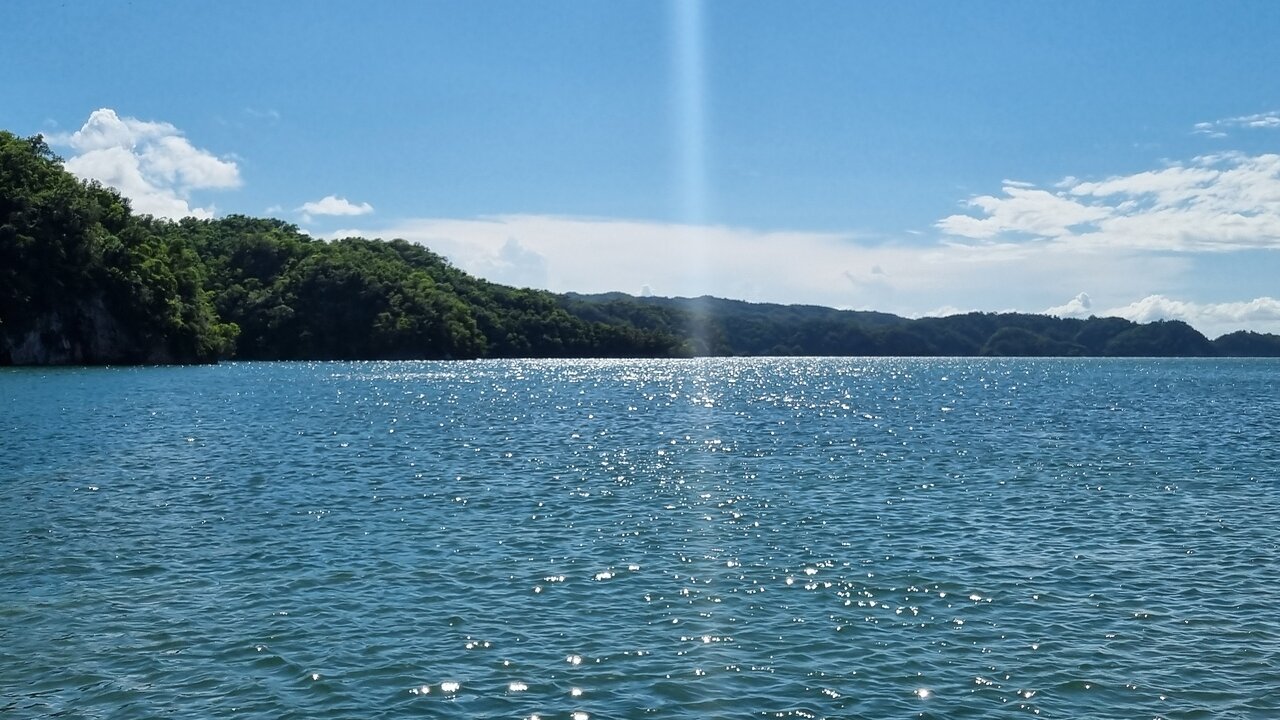
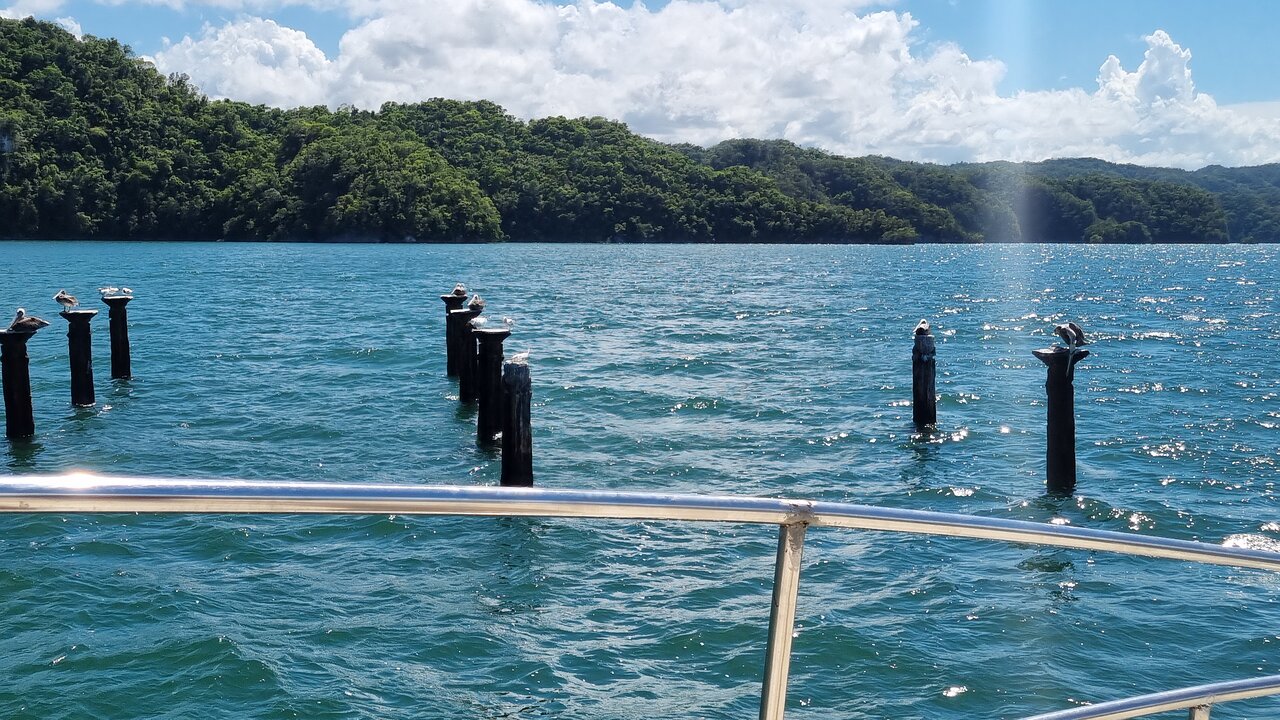
When people imagine the Caribbean Sea around Saona Island, they often picture turquoise water, tropical sunshine, coral reefs and sandy beaches. Yet beneath the visible surface, an almost invisible process is continuously taking place: tiny particles of organic material are sinking through the water column.
Scientists call this phenomenon marine snow.
Marine snow is not frozen water. It is a mixture of biological remains, microscopic organisms, organic fragments and other particles that gather into small aggregates and descend through the ocean. Although these particles may look insignificant, they help supply food to deep-sea organisms and transport carbon away from surface waters.
Understanding marine snow reveals another side of the ocean environment surrounding Saona Island and the wider Caribbean region.
1. What Is Marine Snow?
Marine snow is a continuous downward movement of organic particles through seawater. It receives its name because the particles can resemble tiny white or transparent snowflakes drifting through dark water.
These particles originate from many sources, including:
- Dead phytoplankton and microscopic algae
- Decaying zooplankton and other small organisms
- Animal fecal pellets
- Fragments of marine plants and animals
- Bacteria and organic aggregates
- Small shells and mineral particles mixed with organic matter
Some particles remain very small, while others combine into larger flakes and clumps.
According to NOAA, marine snow begins largely in upper ocean waters and can provide an important source of energy for organisms living in deeper parts of the ocean.
Unlike a single organism or a fixed habitat, marine snow is a moving supply of organic material that connects different depths.
2. How Does Marine Snow Form?
Marine snow develops through several biological and physical processes.
Step 1: Organic material is produced near the surface
Phytoplankton use sunlight and dissolved carbon dioxide to produce organic matter through photosynthesis. These microscopic organisms form the foundation of many marine food systems.
Other organisms consume phytoplankton and produce additional organic material through feeding, waste and biological activity.
Step 2: Particles are released into the water
When organisms die, shed body material or produce waste, their remains enter the surrounding water.
Examples include dead plankton, fragments of cells, discarded biological structures and fecal pellets.
Step 3: Small particles combine
Sticky organic substances can help small particles attach to one another. As particles collide and aggregate, they form larger structures.
These aggregates may contain different combinations of organic material, microorganisms, minerals and biological remains.
Step 4: Aggregates begin sinking
When an aggregate becomes sufficiently dense relative to the surrounding seawater, gravity causes it to sink.
Its size, shape, density and composition influence how quickly it descends.
This process creates the underwater snowfall known as marine snow.
3. What Is Marine Snow Made Of?
Marine snow is not a single substance. Its composition changes depending on the location, depth, season and biological conditions.
Important components include:
Phytoplankton remains: Dead microscopic photosynthetic organisms can become part of sinking aggregates.
Zooplankton remains: Small drifting animals and their biological fragments contribute organic material.
Fecal pellets: Waste produced by zooplankton and other marine animals can carry concentrated organic carbon and nutrients.
Bacteria: Microorganisms may live on and around sinking particles, using organic material as an energy source.
Mineral particles: Small mineral grains and shell fragments can become incorporated into aggregates and influence their density.
Organic mucus and polymers: Sticky substances released by microorganisms can help particles join together.
The proportions of these components vary considerably. A marine snow particle collected in one ocean region may have a different structure and composition from one found elsewhere.
4. Why Does Marine Snow Sink?
Gravity is the main force responsible for the downward movement of sinking marine particles.
However, not every particle sinks at the same speed.
Several factors influence sinking behavior:
- Particle size: Larger aggregates may sink faster than individual microscopic particles.
- Density: Particles that are denser relative to seawater generally sink more readily.
- Shape: Irregular shapes can create different levels of resistance as particles move through water.
- Porosity: Water-filled spaces within an aggregate influence its effective density.
- Composition: Mineral material, organic matter and trapped gases can affect particle behavior.
- Water movement: Currents and turbulence may move particles sideways, suspend them or change their downward paths.
Some particles descend relatively slowly, while compact and dense particles can travel much faster.
Marine snow therefore does not fall through the ocean at one universal speed.
5. How Marine Snow Supports Deep-Sea Food Systems
Sunlight does not reach the deepest ocean environments, so photosynthesis cannot provide a direct food supply there.
Many deep-sea organisms depend on organic material transported from upper waters.
Marine snow provides part of that supply.
Deep-sea organisms may use sinking particles in several ways:
- Filter-feeding animals capture particles from the surrounding water.
- Scavengers consume organic material that reaches the seabed.
- Small animals feed on particles suspended in deeper water.
- Microorganisms break down organic matter and release nutrients.
- Larger organisms may feed on animals that depend on sinking particles.
This creates a connection between surface productivity and deep-ocean food availability.
Marine snow is not the only energy source in the deep sea. Chemosynthetic ecosystems, for example, use chemical energy rather than sunlight. Nevertheless, sinking organic material is an important food pathway across large areas of the ocean.
6. The Biological Carbon Pump: Marine Snow and Climate
One of the most important functions of marine snow is its contribution to the ocean's biological carbon pump.
The process begins when phytoplankton absorb dissolved carbon dioxide during photosynthesis.
That carbon becomes part of their organic material. It can then move through the food web as other organisms consume phytoplankton and one another.
Some of the carbon eventually becomes part of sinking particles.
As these particles descend, they transport organic carbon from surface waters into deeper parts of the ocean.
This process is called gravitational carbon export, one component of the biological carbon pump.
If carbon is transported deep enough and remains isolated from surface waters, it may be stored away from the atmosphere for long periods.
However, not all sinking carbon reaches the seafloor.
A considerable proportion is consumed or decomposed during its descent. Microorganisms and animals transform organic material, releasing carbon dioxide and recycling nutrients at different depths.
The amount of carbon that reaches deep water therefore depends on particle production, sinking behavior, decomposition and consumption.
7. What Happens to Marine Snow During Its Journey?
Marine snow changes as it sinks.
Its journey is not simply a straight downward movement of unchanged particles.
Fragmentation
Larger aggregates may break into smaller pieces because of physical disturbance, turbulence or biological activity.
Microbial decomposition
Bacteria and other microorganisms consume organic compounds attached to particles. This reduces the amount of organic material available for further transport.
Grazing
Zooplankton and other organisms may capture and consume sinking particles.
Aggregation
Small particles can collide and combine, producing larger aggregates that may sink differently.
Dissolution and chemical change
Some components can dissolve or change chemically during descent. For example, research published in 2026 reported that bacteria living on marine snow particles can dissolve calcium carbonate within them, potentially changing particle weight and sinking behavior.
These processes help determine how much material reaches deeper waters.
8. Why Do Some Marine Snow Particles Sink Faster Than Others?
The sinking speed of marine snow is an important subject in oceanography.
A compact fecal pellet may descend much faster than a loose, porous organic aggregate.
Mineral components can also provide additional density, sometimes described as ballast.
However, particle behavior is complex. A large particle is not automatically a fast-sinking particle. Its internal structure, water content, density and surrounding conditions all matter.
Scientists study these differences because sinking speed influences how long organic carbon remains in upper waters before being transported deeper.
A faster descent can sometimes reduce the time available for consumption and decomposition in surface and midwater layers.
9. Marine Snow and the Caribbean Sea
The Caribbean Sea contains a variety of marine environments, including coral reefs, seagrass meadows, coastal waters and deeper offshore habitats.
These environments are connected through biological production, organic material transport and water movement.
Marine snow is a useful concept for understanding how organic material can move from productive surface waters toward deeper marine environments.
In the wider Caribbean context, the quantity and composition of sinking particles may vary with:
- Phytoplankton production
- Seasonal environmental conditions
- Nutrient availability
- Coastal runoff and suspended material
- Biological feeding activity
- Water-column mixing and circulation
For Saona Island, marine snow provides a scientific way to understand the connection between surface productivity and deeper marine food systems.
However, the presence, concentration, sinking rate and seasonal patterns of marine snow specifically around Saona Island would require local oceanographic measurements. General marine science should not be treated as proof of a particular local observation.
10. How Do Scientists Study Marine Snow?
Marine snow particles can be difficult to study because they are fragile and constantly moving.
Oceanographers use several methods to investigate them.
Sediment traps
Sediment traps are instruments designed to collect particles sinking through a selected depth of the water column.
Researchers can analyze the collected material to estimate particle flux and identify its composition.
Underwater cameras
Specialized cameras photograph or record particles as they move through seawater.
These images help scientists study particle abundance, size, shape and movement.
Optical particle instruments
Optical systems measure characteristics of particles passing through a viewing area. They can help researchers estimate particle size distributions and concentrations.
Microscopic analysis
Collected samples can be examined under microscopes to identify biological fragments, aggregates and other components.
Chemical analysis
Laboratory measurements can estimate organic carbon, nitrogen, mineral content and other chemical properties.
Autonomous underwater instruments
Some research systems are designed to operate for extended periods, allowing scientists to collect information about changing particle conditions at different depths.
Combining these methods provides a clearer picture of how marine snow moves and changes.
11. New Research: Tiny Bacteria Can Change the Ocean's Carbon Transport
Marine snow is not simply passive material falling through seawater. It is also a living microenvironment.
A study reported by Woods Hole Oceanographic Institution in March 2026 described how bacteria attached to marine snow particles can dissolve calcium carbonate.
Calcium carbonate can act as ballast, increasing the density of some sinking particles. When bacteria dissolve this mineral, the particles may become lighter and sink differently.
This finding illustrates how microscopic biological processes can influence much larger ocean systems.
It also demonstrates why scientists need to understand the physical, chemical and biological properties of marine snow together.
The research does not establish a specific effect around Saona Island; it provides a broader scientific insight into the ocean's carbon transport system.
12. How Could Environmental Change Affect Marine Snow?
Marine snow depends on biological production and the conditions through which particles travel.
Changes in ocean temperature, nutrient supply, plankton communities and water-column structure may influence particle formation and transport.
Potential changes include:
- Altered phytoplankton production
- Changes in the size and composition of organic aggregates
- Different rates of particle consumption
- Changes in microbial decomposition
- Altered sinking and carbon-export patterns
- Changes in the amount of organic material reaching the seabed
Ocean warming and other environmental changes may therefore influence the biological carbon pump.
The direction and magnitude of these effects are not identical everywhere. Scientists need long-term measurements to understand how particular ocean regions respond.
13. Why Marine Snow Matters for Ocean Conservation
Marine snow connects surface ecosystems with deeper marine environments.
Protecting ocean health therefore involves more than maintaining attractive beaches and visible coral reefs.
Important conservation priorities include:
Reducing pollution: Limiting plastic, chemical and nutrient pollution helps protect marine ecosystems and the organisms involved in ocean food systems.
Protecting coastal habitats: Healthy mangroves, seagrass meadows and coral reefs support marine biodiversity and contribute to wider ecosystem processes.
Supporting scientific research: Long-term monitoring helps scientists understand changes in particle transport and ocean carbon cycling.
Encouraging responsible tourism: Visitors can help reduce environmental pressure by avoiding littering, respecting wildlife and choosing responsible marine activities.
Improving ocean awareness: Learning about hidden processes such as marine snow helps people appreciate the complexity of the ocean.
14. What Can Visitors to Saona Island Learn from Marine Snow?
Visitors may not notice marine snow during a normal beach visit or boat excursion. Many of its processes take place underwater and are best studied with specialized instruments.
Nevertheless, the concept offers an interesting way to understand the ocean.
The clear water near a tropical island is only the visible part of a much larger system. Organic material is continuously produced, consumed, transformed and transported beneath the surface.
Marine snow reminds us that the ocean is connected vertically as well as horizontally.
The organisms living near the surface, the animals in deeper waters and the biological processes occurring throughout the water column are all part of an interconnected marine environment.
Frequently Asked Questions
1. What is marine snow?
Marine snow is a mixture of sinking organic particles, including dead plankton, biological fragments, fecal pellets, bacteria and other material that travels from upper ocean waters toward deeper environments.
2. Is marine snow actually snow?
No. It is not frozen water. The name describes the appearance of small particles drifting through seawater like falling snowflakes.
3. What causes marine snow to form?
Marine snow forms when organic material and other particles collide, attach to one another and create aggregates that can sink under gravity.
4. Does marine snow feed deep-sea animals?
Yes. Many deep-sea organisms consume sinking particles directly or depend on animals that feed on them.
5. How does marine snow help regulate climate?
Marine snow transports some organic carbon from surface waters into the deeper ocean. Carbon that remains isolated at depth may be stored away from atmospheric exchange for extended periods.
6. Does all marine snow reach the ocean floor?
No. Much of it is consumed, fragmented or decomposed before reaching the seabed.
7. Can marine snow be seen around Saona Island?
Marine particles occur throughout the ocean, but their visibility and abundance vary. Confirming particular marine snow conditions around Saona Island would require local observations or measurements.
8. How do scientists measure marine snow?
Scientists use sediment traps, underwater cameras, optical instruments, microscopes and chemical analyses to investigate sinking particles.
9. Is marine snow the same as ocean sediment?
No. Marine snow refers to particles moving through the water column. Sediment generally refers to material deposited on the seabed, although some marine snow eventually becomes part of that sediment.
10. Why is marine snow important?
It helps transfer organic matter to deeper marine environments, supports deep-sea food systems, recycles nutrients and contributes to the ocean's biological carbon pump.
Conclusion: The Hidden Ocean Connection Beneath Saona Island
Marine snow demonstrates that the ocean is connected by processes that are often invisible to visitors.
Tiny particles produced or released near the surface can combine, sink, feed deep-sea organisms and transport carbon through the water column.
These processes link marine productivity with deep-ocean ecosystems and the global carbon cycle.
Although more local research is needed to describe marine snow conditions specifically around Saona Island, understanding this phenomenon provides a deeper appreciation of the Caribbean Sea.
The next time you look across the turquoise water, remember that another world exists beneath the surface—one where microscopic particles help sustain life and influence the planet's climate.

Local explorer & expert guide in Birdwatching Guide.