Antillean Nighthawk in Los Haitises: Flight Patterns, Calls and Seasonal Presence
As the sun begins to set over Los Haitises National Park, the sky can become an interesting place for birdwatchers. Birds that were difficult to notice during the day may become active, while flying insects attract aerial hunters that search for food above open landscapes.
One of these birds is the Antillean Nighthawk (Chordeiles gundlachii), a member of the nightjar family. It is adapted to catching insects in flight and is known for its long, pointed wings, fast aerial movements and distinctive vocalizations.
The species is included in the published bird checklist for Los Haitises National Park. It has also been documented elsewhere in Samaná Province, including a recorded observation in Las Terrenas in May 2025. These records make it relevant to the wider birdlife of the region, although they do not guarantee sightings at particular park locations.
For visitors exploring Los Haitises from Sabana de la Mar, understanding the Antillean Nighthawk offers another way to appreciate the area's bird diversity. This guide explains how to identify the species, understand its flight, recognize its calls and learn about its seasonal movements.
What Is the Antillean Nighthawk?
The Antillean Nighthawk is a bird in the family Caprimulgidae, which includes nightjars and nighthawks. Its scientific name is Chordeiles gundlachii.
It occurs across parts of the Caribbean, including the Greater Antilles, Bahamas and other islands. Its breeding distribution also includes southern Florida.
Unlike the Hispaniolan Nightjar, which is endemic to Hispaniola, the Antillean Nighthawk has a much wider geographical distribution.
The species is especially associated with open and semi-open environments where it can fly freely while searching for insects.
Why is it called a nighthawk?
Nighthawks belong to the nightjar family, but the name reflects their distinctive appearance and feeding behavior.
They often become active around dusk and may continue feeding after dark. Their long, narrow wings allow them to maneuver through the air while pursuing flying insects.
The Antillean Nighthawk is therefore a useful example of a bird adapted to aerial feeding rather than searching for most of its food on branches or the ground.
Is it found in Los Haitises?
Yes. The Antillean Nighthawk appears in the Avibase bird checklist for Los Haitises National Park.
There is also a documented observation from Las Terrenas in Samaná Province, dated May 7, 2025.
These records are useful evidence of the species' presence in the wider region. However, a regional observation should not be confused with a confirmed sighting at every visitor location inside the national park.
How to Identify an Antillean Nighthawk
The Antillean Nighthawk can be difficult to identify because its appearance is similar to that of other nighthawk species.
It is often easier to recognize when several features are considered together, including its flight, wing shape, pale wing markings and voice.
1. Long, pointed wings
One of the most noticeable features is its long, narrow and pointed wings.
During flight, the bird may appear slim and aerodynamic. It can make quick turns and changes in direction while pursuing insects.
Its wing shape is particularly useful when observing it against the evening sky.
2. Brown, gray and buff plumage
The upperparts have a mixture of brown, gray and darker markings. The underparts are patterned rather than uniformly colored.
These colors help the bird blend into its surroundings when resting on the ground or another suitable surface.
3. Pale wing bands
A pale band across the primary flight feathers is visible when the bird flies.
This marking is an important identification feature, although the exact position and width can vary.
The Antillean Nighthawk can look very similar to the Common Nighthawk, so wing markings alone should not always be treated as conclusive identification.
4. A wide mouth
Like other members of its family, the Antillean Nighthawk has a wide mouth adapted for capturing insects in flight.
Its bill may appear relatively small when the mouth is closed, but the broad gape becomes more noticeable when feeding.
5. Flight behavior
The bird often flies in a series of swoops, turns and changes in direction as it pursues insects.
It may appear to glide briefly before making another rapid movement.
Watching its flight pattern can help observers distinguish it from birds that fly in more direct and regular paths.
Where Does the Antillean Nighthawk Live?
The Antillean Nighthawk uses open and semi-open habitats across its Caribbean breeding range.
Its preferred environments can include:
- Dry scrubland
- Open woodland
- Savanna-like landscapes
- Grassland
- Coastal areas
- Open spaces near towns
- Flat, sparsely vegetated nesting areas
It does not depend exclusively on dense tropical forest.
This is an important distinction when considering the varied landscape of Los Haitises. The national park is famous for its mangroves, limestone formations and forested areas, but its wider surroundings also include different types of open and coastal environments.
Open areas and coastal landscapes
Open spaces provide room for aerial hunting. Flying insects can be caught more easily when the bird has sufficient space to maneuver.
Coastal landscapes and open scrub can therefore be useful habitats in parts of the species' range.
Semi-open vegetation
Areas with scattered trees and shrubs can provide both resting places and access to open airspace.
The combination of vegetation and open flying areas may be particularly useful for an insect-eating bird.
Habitat around Samaná
The Antillean Nighthawk has been recorded in Samaná Province. An observation from Las Terrenas provides a documented example of its occurrence in the wider province.
However, visitors should not assume that a record from Las Terrenas means the bird will be present at a specific mangrove channel, cave entrance or boat-tour stop in Los Haitises.
Why Is the Antillean Nighthawk Active Around Dusk?
The Antillean Nighthawk is often associated with the period around sunset and the early evening.
This activity pattern is known as crepuscular behavior. The word refers to animals that are especially active around dawn or dusk.
A useful time for catching insects
Flying insects are an important food source for the Antillean Nighthawk. Their activity can change throughout the day and may increase during suitable evening conditions.
By feeding around dusk, the bird can take advantage of insects moving through the air.
Activity after sunset
The species may also feed after dark, including on nights when moonlight provides additional visibility.
Its activity is not restricted to one exact hour. Weather, insect availability and local conditions can influence when it hunts.
Why warm evenings can be interesting
On warm evenings, flying insects may be active over open spaces, towns and coastal environments.
This can create feeding opportunities for aerial insectivores, including nighthawks.
However, visitors should not interpret a warm evening as a guarantee of a sighting.
How Does the Antillean Nighthawk Hunt?
The Antillean Nighthawk is an aerial insectivore. This means it captures much of its food while flying.
Its long wings and broad mouth are well suited to this feeding method.
1. Searching for flying insects
The bird flies over suitable open areas while looking for insects.
It may move across a relatively wide area rather than remaining in one small patch of vegetation.
2. Making rapid turns
When it detects prey, it can change direction quickly.
Its flight may include swooping movements, short glides and sudden changes in altitude.
3. Capturing prey in flight
The bird opens its wide mouth to catch insects while moving through the air.
This allows it to feed without landing each time it finds prey.
4. Continuing its search
After catching an insect, the nighthawk may continue flying and searching for additional food.
This feeding strategy can produce an impressive aerial display, particularly when several individuals are hunting in the same area.
Understanding the Calls of the Antillean Nighthawk
The Antillean Nighthawk has a distinctive vocalization that is particularly useful for identification.
Its call is often represented in English-language descriptions as a sequence similar to “killy-ka-dick” or “querequequé.”
In the Dominican Republic, the bird is also associated with the local name “querebebé.” These names imitate the sound of its call.
Why the voice matters
The Antillean Nighthawk looks very similar to the Common Nighthawk (Chordeiles minor). In many situations, visual identification can be difficult.
Specialist bird references emphasize that voice is one of the most useful ways to distinguish the two species.
A birdwatcher who learns the call before a trip may therefore have a better chance of recognizing an Antillean Nighthawk in the field.
When might you hear it?
Vocal activity is particularly relevant during the breeding season.
However, the bird may be less vocal away from its breeding grounds. A lack of calling does not necessarily mean the species is absent.
Learning the sound before your visit
Bird sound libraries, including Xeno-canto, contain recordings from the Dominican Republic.
Listening to verified recordings can help visitors become familiar with the call's rhythm and tone.
Avoid playing recordings repeatedly in natural habitats to attract birds. Excessive playback may disturb wildlife.
Seasonal Presence and Migration
The Antillean Nighthawk has a seasonal breeding cycle across its Caribbean range.
It is generally considered a migratory species, although the full details of its non-breeding distribution have historically been difficult to establish.
Arrival during the breeding season
Specialist birding references describe the species arriving on breeding grounds around March and April.
This period corresponds with the beginning of its breeding season in parts of the Caribbean.
The timing can vary according to location and local conditions.
Departure after breeding
Birdfinding.info reports that the species generally departs from its breeding areas between August and October.
This broad seasonal pattern is useful background information, but it should not be treated as a precise calendar for sightings in Los Haitises.
Where does it go during winter?
The non-breeding range has been less clearly documented than its breeding distribution.
For many years, South America was considered a likely wintering destination, but the routes and locations were uncertain.
Research and later observations have added information about the species' movements, but its migration story remains more complicated than a simple north-to-south journey.
What does this mean for visitors?
The Antillean Nighthawk may be more relevant to birdwatching during its breeding period than during other parts of the year.
Nevertheless, seasonal timing alone cannot predict whether a visitor will see one. Local habitat, weather, food availability and the bird's movements all matter.
For a trip planned specifically around this species, consult a current local birding guide or recent observation records.
Antillean Nighthawk vs. Common Nighthawk
One of the most important identification challenges is separating the Antillean Nighthawk from the Common Nighthawk.
The two species are closely related in appearance and can be difficult to distinguish in the field.
FeatureAntillean NighthawkCommon NighthawkScientific nameChordeiles gundlachiiChordeiles minorMain distributionCaribbean and southern Florida breeding areasNorth America, with a broad migratory rangeGeneral appearanceVery similar to Common NighthawkVery similar to Antillean NighthawkWing markingsPale band on the primariesPale band on the primariesVoiceCharacteristic nasal, multi-syllable callDifferent vocal patternBest identification clueVoice, supported by location and appearanceVoice, supported by location and appearance
Because visual features overlap, it is better to avoid identifying every nighthawk by wing markings alone.
A clear recording of the call, together with location and observation details, can provide stronger evidence.
What Is the Difference Between a Nighthawk and a Nightjar?
The terms nighthawk and nightjar can be confusing.
Both refer to birds in the family Caprimulgidae. Nighthawks are part of the same broader family as nightjars, but they are placed in different genera.
The Antillean Nighthawk belongs to Chordeiles. The Hispaniolan Nightjar belongs to Antrostomus.
Both groups feed mainly on insects and are associated with low-light activity, but their appearance, vocalizations and hunting behavior differ.
The Antillean Nighthawk is particularly known for aerial feeding over open areas, while other nightjar species may use different hunting and resting strategies.
Why Is the Antillean Nighthawk Important?
The Antillean Nighthawk contributes to the biodiversity of the Caribbean and the Dominican Republic.
An important aerial insectivore
The species feeds on flying insects, connecting it to the wider food web of open and semi-open habitats.
Part of Caribbean bird diversity
Its distribution across several Caribbean islands illustrates the ecological connections between the region's habitats.
An interesting bird for evening observation
Its flight patterns and calls make it an engaging species for birdwatchers who are interested in the wildlife that becomes active around sunset.
A reason to protect open habitats
Conservation discussions often focus on forests, but open scrub, grasslands and other semi-open landscapes can also be important for wildlife.
Protecting a variety of natural habitats is necessary for maintaining regional biodiversity.
How to Observe the Antillean Nighthawk Responsibly
If you are exploring the Los Haitises region and hoping to observe birds around dusk, responsible behavior is essential.
1. Choose permitted observation areas
Follow official access rules and remain in authorized locations. Do not enter restricted areas after dark.
2. Watch open skies
Nighthawks are aerial hunters, so looking toward open sky above suitable habitat may be more productive than searching only among tree branches.
3. Listen carefully
Learn the species' call before your visit. Voice can be particularly helpful when separating similar nighthawk species.
4. Use binoculars
Binoculars can help you examine wing markings and flight features without approaching wildlife.
5. Avoid artificial disturbance
Do not shine powerful lights at birds or use repeated playback to attract them.
6. Keep a respectful distance
Do not approach suspected nesting locations or disturb birds resting on the ground.
7. Record observations carefully
If you see a possible Antillean Nighthawk, record the date, time, habitat and location. If possible, obtain a photograph or audio recording without disturbing the bird.
If identification is uncertain, label the observation as a possible nighthawk rather than claiming a confirmed species.
Photography Tips for the Antillean Nighthawk
Photographing a fast-flying bird around sunset can be challenging.
The Antillean Nighthawk's flight movements may be unpredictable, and low light can make it difficult to obtain sharp images.
Consider these practical tips:
- Use a telephoto lens suitable for photographing distant birds.
- Select a fast shutter speed to reduce motion blur.
- Track the bird against a relatively uncluttered background.
- Focus continuously while following its flight.
- Take several photographs rather than relying on one frame.
- Avoid flash or other lighting that could disturb wildlife.
- Do not approach nesting or resting birds for a closer image.
A photograph that shows the wing shape and pale wing markings can be useful for later identification.
Visiting Los Haitises from Sabana de la Mar
Sabana de la Mar is an important access point for visitors exploring the eastern side of Los Haitises National Park.
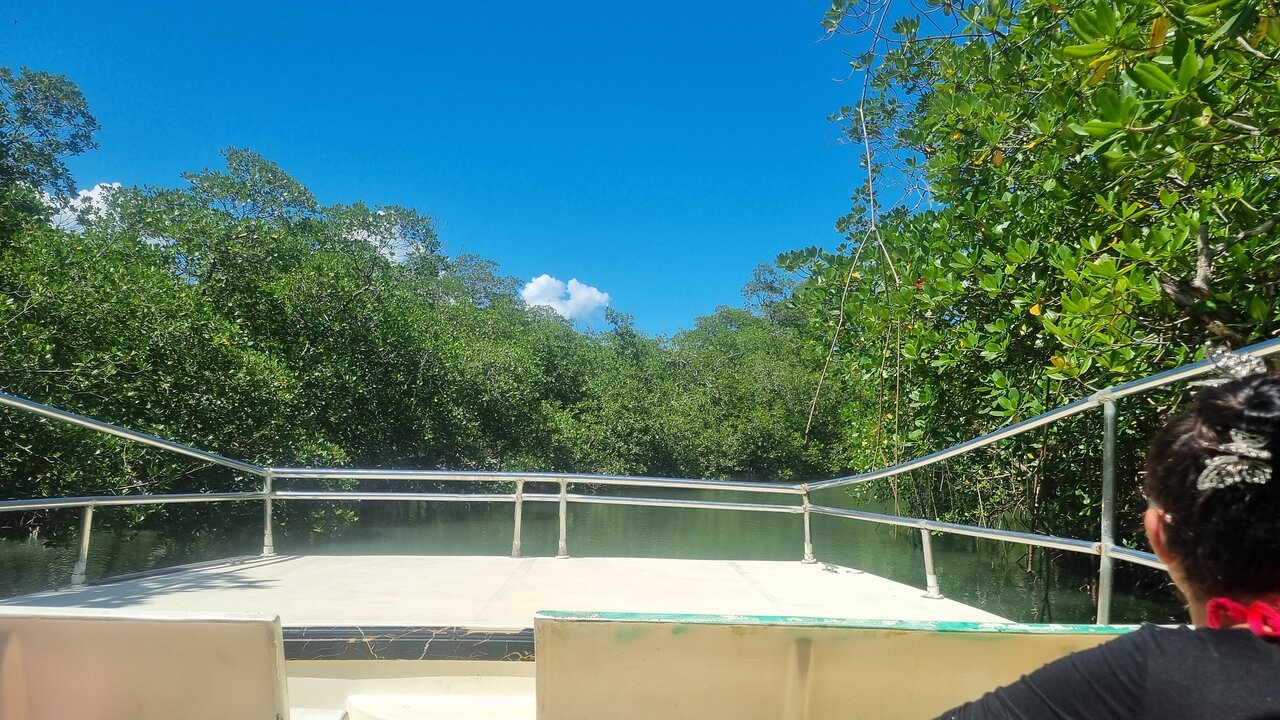
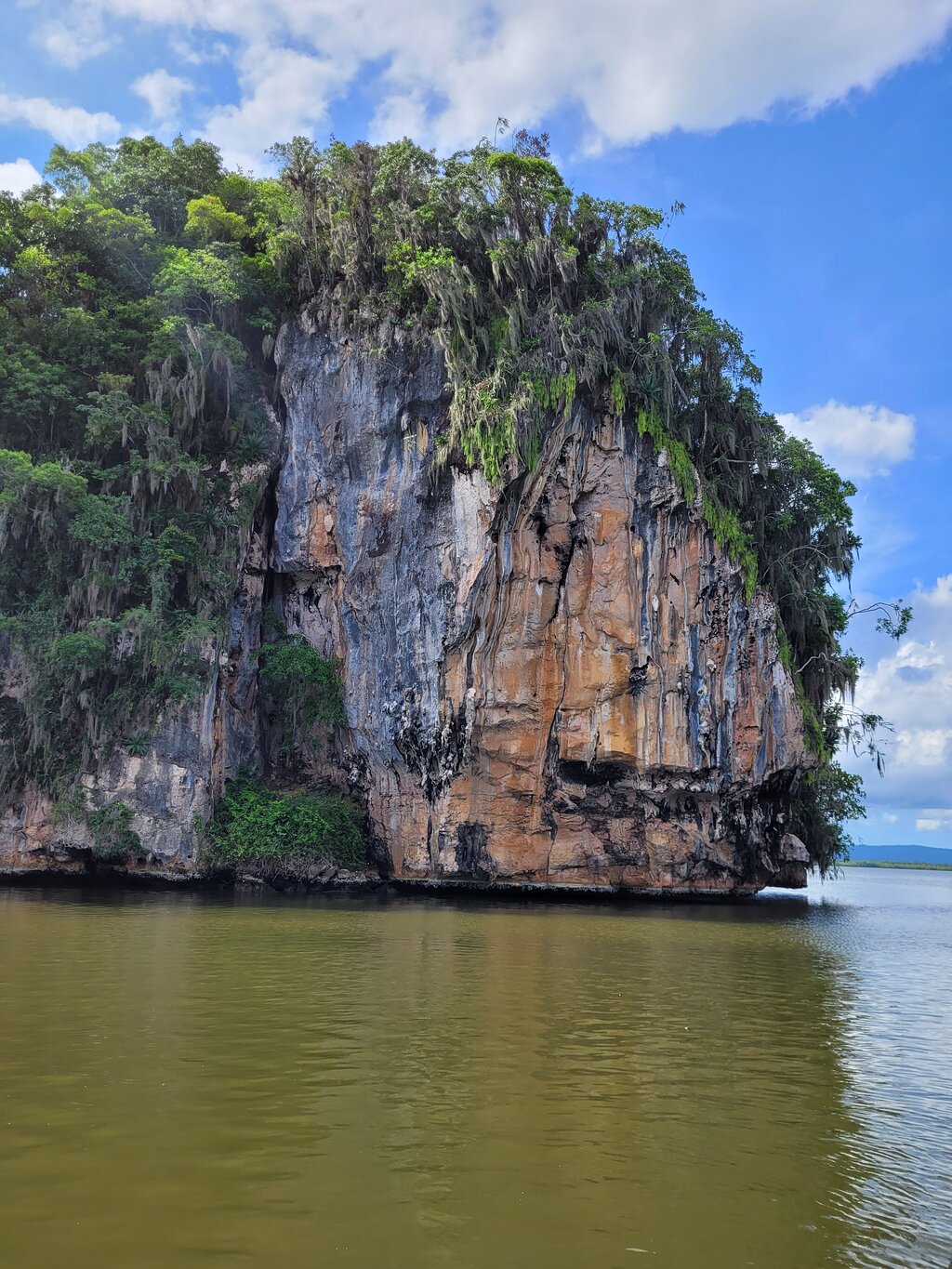
The region offers mangroves, limestone landscapes, coastal scenery and a variety of habitats that make it interesting for nature enthusiasts.
Many visitors explore the park through organized excursions. Depending on the provider and current access arrangements, a visit may introduce travelers to:
- Mangrove channels
- Limestone formations
- Coastal landscapes
- Forest habitats
- Native and migratory birdlife
A regular daytime boat trip is not necessarily a dedicated birdwatching excursion. If you are particularly interested in the Antillean Nighthawk, ask whether the provider offers a suitable nature or birdwatching activity and whether observation around dusk is permitted.
Confirm the departure point, timing, route, transport and access arrangements before booking.
Do not assume that every part of the park is open after sunset or that a particular bird will appear during an excursion.
Frequently Asked Questions
Is the Antillean Nighthawk found in Los Haitises National Park?
Yes. The species is included in the published Avibase checklist for Los Haitises National Park. Its inclusion does not guarantee sightings at a particular visitor site.
What is the scientific name of the Antillean Nighthawk?
Its scientific name is Chordeiles gundlachii.
Is the Antillean Nighthawk endemic to the Dominican Republic?
No. It is found across parts of the Caribbean and also breeds in southern Florida.
What does the Antillean Nighthawk eat?
It feeds mainly on flying insects. Moths, beetles and other aerial insects are part of its diet.
Why does the Antillean Nighthawk fly in sudden turns?
It changes direction while pursuing flying insects. Its long, pointed wings help it maneuver during aerial hunting.
What does the Antillean Nighthawk sound like?
Its call is often described as a nasal, multi-syllable sequence, sometimes represented as “killy-ka-dick” or “querebebé.”
When is the Antillean Nighthawk present in the Caribbean?
It breeds across parts of the Caribbean during the warmer months. Specialist references describe arrival around March and April and departure from breeding areas between August and October, although local timing varies.
Where does the Antillean Nighthawk go during winter?
Its non-breeding distribution has historically been poorly understood. South America has been considered a likely destination, but its complete migration routes are not fully established.
Is the Antillean Nighthawk the same as the Common Nighthawk?
No. They are separate species, although they look very similar. Their vocalizations are among the most useful identification differences.
Can I see the Antillean Nighthawk on a regular Los Haitises tour?
There is no guarantee. The bird is included in the park checklist, but sightings depend on location, season, weather and natural activity. A standard daytime tour may not be suitable for observing a dusk-active bird.
Final Thoughts
The Antillean Nighthawk is an interesting part of the bird diversity associated with Los Haitises and the wider Samaná region. Its long pointed wings, aerial feeding behavior and distinctive calls make it a memorable bird for people interested in Caribbean wildlife.
Unlike birds that spend much of their time searching through branches, the Antillean Nighthawk catches insects while flying. Its seasonal movements also provide a useful example of the connections between Caribbean breeding habitats and the wider region.
For visitors traveling from Sabana de la Mar, learning about this species can make a nature trip more rewarding. Keep an eye on open skies, listen carefully around suitable habitats and remember that wildlife observation should always respect the natural behavior of birds.
Planning a nature visit to Los Haitises? Explore the park's mangroves, limestone landscapes and wildlife with a responsible tour provider. Confirm the available route and activities before booking, and treat every wild bird sighting as a privilege rather than a guarantee.
Local explorer & expert guide in Birdwatching Guide.